







RBI Pushes Tata Sons Towards Listing: What It Means for Tata Group Investors
The Reserve Bank of India (RBI) has reiterated that Tata Sons must comply with regulatory requirements that include listing its shares on the stock market. The development has renewed attention on...

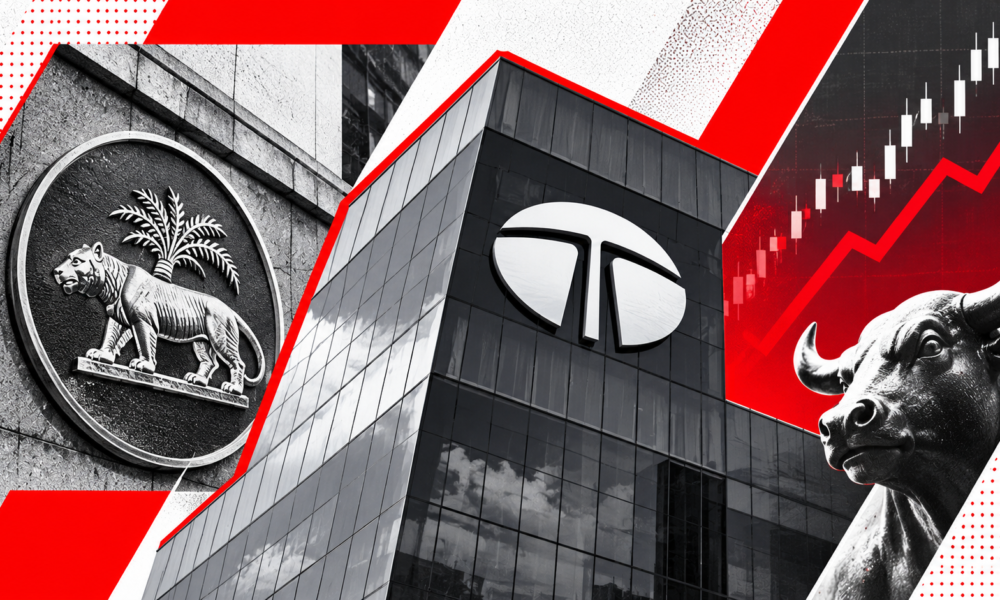
The Reserve Bank of India (RBI) has reiterated that Tata Sons must comply with regulatory requirements that include listing its shares on the stock market. The development has renewed attention on the future of the holding company of one of India’s largest business groups.
The RBI’s latest communication comes amid continuing efforts by Tata Trusts to keep Tata Sons privately held.
The issue is important for financial markets because a potential Tata Sons listing could become one of India’s most closely watched corporate developments.
Why does the RBI want Tata Sons to list?
Tata Sons is classified as an upper-layer non-banking financial company (NBFC-UL) under the RBI’s regulatory framework.
Upper-layer NBFCs are subject to additional regulatory requirements because of their size, financial activities and potential importance to the financial system.
These rules include a mandatory listing requirement.
The RBI has now reiterated that Tata Sons must comply with the applicable regulations, including the requirement to list its shares.
The company had previously explored options to exit the NBFC regulatory framework by applying to surrender its registration.
However, the RBI rejected its deregistration application in September 2026.
Why does Tata Sons want to remain private?
Tata Sons is the holding company of the Tata Group.
It has interests across several major businesses, including Tata Consultancy Services, Tata Motors, Tata Steel, Tata Power, Indian Hotels and Tata Consumer Products.
Tata Trusts is the largest shareholder in Tata Sons and plays an important role in the group’s ownership structure.
Keeping Tata Sons privately held allows the company to retain its existing ownership arrangement without opening its shares to public market trading.
A public listing, on the other hand, would introduce new shareholders and greater market scrutiny.
It could also require changes to corporate governance, disclosure practices and ownership arrangements.
What could a listing mean for investors?
A potential Tata Sons IPO would attract significant attention from institutional and retail investors.
The company has indirect exposure to several major sectors through its subsidiaries and associated businesses.
A listing could provide investors with direct access to the holding company’s portfolio of businesses.
It could also create a new opportunity to assess the value of its investments and corporate assets.
However, the valuation of Tata Sons would depend on several factors, including its shareholdings, liabilities, governance structure and the market’s assessment of its businesses.
A possible listing does not automatically mean that all Tata Group companies would benefit.
Why did Tata Group shares react?
The latest RBI communication influenced market sentiment towards several listed Tata Group companies.
According to Moneycontrol, Tata Chemicals shares rose by around 8% during early trading on 17 November, while Tata Investment Corporation also recorded gains.
Other listed group companies also saw movements.
These reactions reflected investor interest in the possibility of a future Tata Sons listing and the potential implications for the value of its holdings.
However, movements in individual shares should not be confused with confirmation of an IPO.
What happens next?
The Tata Sons board is expected to discuss its restructuring plans at a meeting scheduled for 26 November 2026.
The company’s response to the RBI’s position will be important in understanding its next steps.
For now, the regulator has reiterated the requirement to comply with applicable rules. It has not announced a completed listing or a confirmed IPO date.
Why this matters for India’s financial markets
The Tata Sons issue highlights the relationship between corporate ownership, financial regulation and public market transparency.
It also shows how regulatory decisions involving a major private company can influence the wider stock market.
For investors, the key development to watch is whether Tata Sons takes steps towards meeting the listing requirement or pursues another regulatory route.
Until there is an official announcement, a Tata Sons IPO should be treated as a possibility under regulatory pressure, not a confirmed public offering.
Sources: Financial Express, 17 November 2026; Moneycontrol, 17 November 2026.






No Comment! Be the first one.