






India’s Inflation Rises: Could the RBI Increase Interest Rates Again?
India is facing renewed inflationary pressure as rising food and wholesale prices create fresh challenges for households, businesses and policymakers. The latest economic data has increased attention...

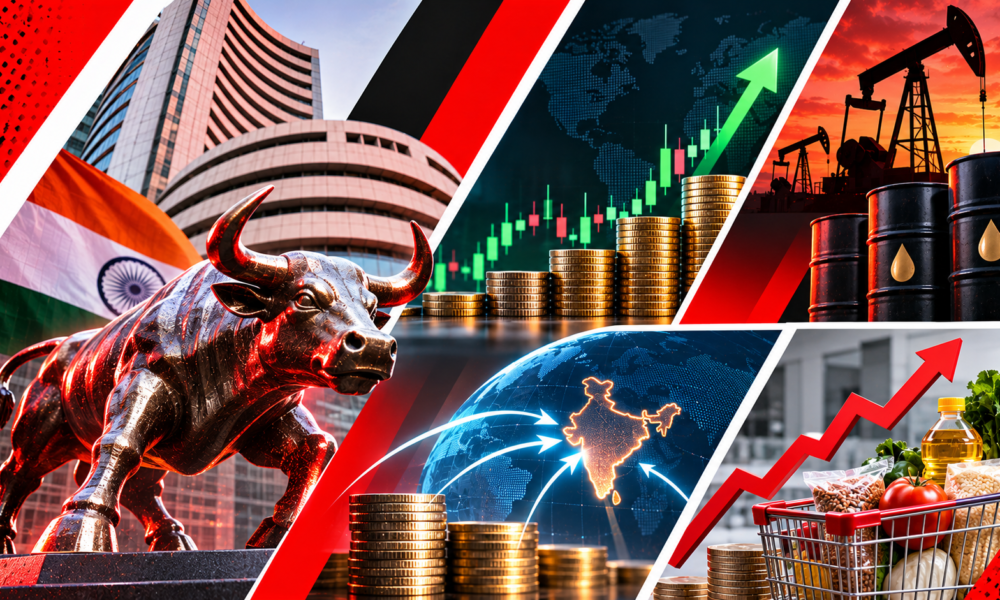
India is facing renewed inflationary pressure as rising food and wholesale prices create fresh challenges for households, businesses and policymakers.
The latest economic data has increased attention on the Reserve Bank of India (RBI) and the possibility of further interest rate increases.
According to Reuters on 17 November 2026, India’s retail inflation reached 6.1% in October, moving above the RBI’s upper tolerance limit of 6%. Wholesale inflation also climbed above 12%, while food inflation reached 8.5%.
The figures have raised concerns about the cost of living and the future direction of monetary policy.
Why is inflation increasing?
Inflation refers to the general increase in the prices of goods and services over time.
Several factors are contributing to the latest pressure on Indian prices.
Higher energy costs can increase transportation, manufacturing and distribution expenses.
Food prices can also rise because of supply disruptions, weather conditions and changes in agricultural production.
Reuters reported that oil prices and the effects of El Niño-related food costs are among the factors adding to inflationary pressure.
When businesses face higher operating costs, some of these expenses may eventually be passed on to consumers.
What does this mean for ordinary households?
Higher inflation can reduce the purchasing power of household income.
For example, if the prices of vegetables, cooking oil, transport and other essentials rise faster than salaries, families may have less money available for savings and discretionary spending.
Households with fixed monthly budgets may find it harder to manage expenses.
Inflation can also affect people who are saving for major purchases such as homes, education and retirement.
This makes price stability important for both household finances and wider economic growth.
Could the RBI increase interest rates?
The RBI uses monetary policy to manage inflation and support economic stability.
One of its main tools is the repo rate, which influences borrowing costs across the financial system.
The RBI increased interest rates by 25 basis points in October 2026 as part of its move towards tighter monetary policy.
The next policy decision will be important in determining how the central bank responds to the latest inflation figures.
Reuters reported that economists at JPMorgan expected inflation to remain above 6% through June 2027 and forecast a possible 75-basis-point increase by April 2027.
These are analyst expectations, not confirmed RBI decisions.
How could higher interest rates affect people?
An increase in interest rates can influence several parts of household finances.
People with floating-rate home loans may face higher monthly repayments if banks pass on increased borrowing costs.
Personal loans and business borrowing may also become more expensive.
For companies, higher financing costs can affect expansion plans, working capital and investment decisions.
On the other hand, higher interest rates may improve returns on certain fixed-income savings products, depending on the bank and investment instrument.
What about businesses and the stock market?
Inflation can affect companies differently.
Manufacturers may face higher raw material and energy costs, while consumer-facing companies may struggle if households reduce spending.
Higher borrowing costs can also affect sectors such as real estate, automobiles and infrastructure.
The stock market may react to changing interest rate expectations because investors consider how monetary policy could influence corporate earnings and valuations.
However, not every company is affected in the same way.
What should consumers do?
Households can respond to inflation by reviewing monthly budgets, managing unnecessary expenses and maintaining an emergency savings reserve.
People planning to take loans should compare interest rates and consider how repayments would change under different scenarios.
Investors should avoid reacting to inflation headlines without considering their longer-term financial goals.
What lies ahead?
India’s inflation outlook will remain an important issue for the economy.
The RBI must balance price stability with the need to support economic growth.
Its December 2026 policy meeting will be closely watched by households, businesses and financial markets.
The central question is whether the latest rise in prices proves temporary or develops into more persistent inflationary pressure.
Source: Reuters, 17 November 2026.





No Comment! Be the first one.