








Indian Stock Market Falls as Rising Oil Prices Add to Investor Concerns
Indian equity markets came under pressure on Tuesday as rising crude oil prices and renewed tensions in the Middle East weighed on investor sentiment. The Sensex and Nifty 50 extended their recent...

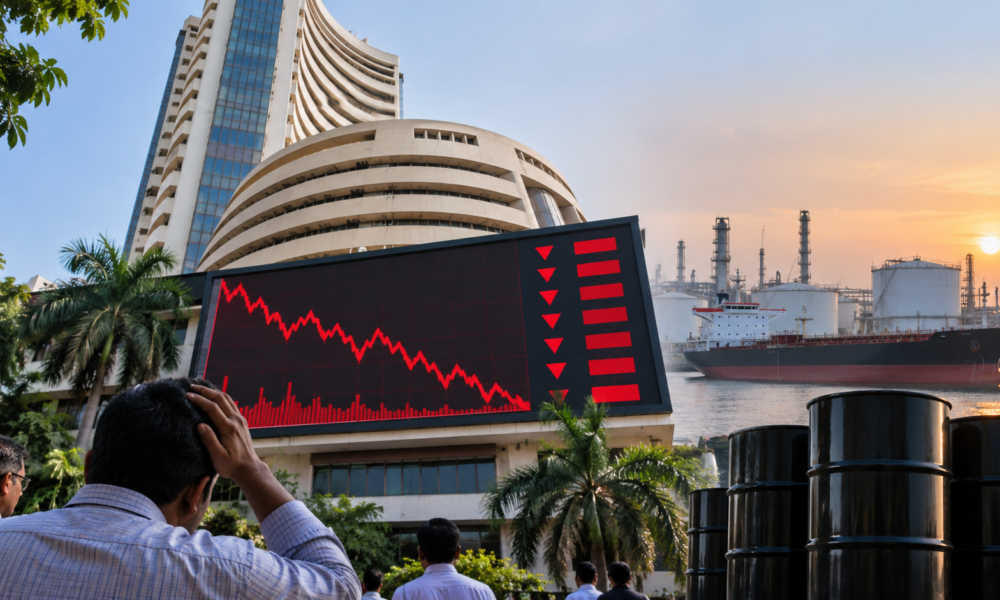
Indian equity markets came under pressure on Tuesday as rising crude oil prices and renewed tensions in the Middle East weighed on investor sentiment. The Sensex and Nifty 50 extended their recent decline, with investors watching global developments closely for their possible impact on inflation, interest rates and corporate earnings.
The Nifty 50 fell 0.46% to 23,668.85, while the BSE Sensex declined 0.53% to 75,727.30 during Tuesday’s trading. The latest fall follows a difficult period for Indian equities, with the benchmarks already under pressure from concerns around global markets and higher energy prices.
The main concern for India is crude oil. Brent crude prices climbed towards $98 a barrel as the conflict in the Middle East intensified. India imports about 85% of its crude oil requirements, making movements in international oil prices particularly important for the domestic economy. A sustained rise in crude can increase the country’s import bill and put pressure on inflation, the rupee and corporate costs.
The rupee also weakened on Tuesday, falling to around ₹94.69 against the US dollar. The Reserve Bank of India intervened through state-run banks to limit the currency’s losses, according to Reuters. The central bank’s actions have helped prevent sharper movements in the rupee, although prolonged pressure from expensive oil could make the currency’s outlook more difficult.
Several major sectors remained under pressure as the market reacted to the changing global backdrop. Financial stocks and private banks were among the areas seeing declines, with HDFC Bank, ICICI Bank and Reliance Industries also falling. Broader market indices were weaker as well, with both small-cap and mid-cap stocks declining around 0.3%.
Not every stock moved lower. GE Vernova T&D India gained sharply after being selected as the lowest bidder for a major Power Grid Corporation project estimated at around ₹13,000 crore. Defence stocks such as Bharat Electronics and Hindustan Aeronautics also advanced following government procurement approvals worth around ₹1.1 trillion.
The market is now entering a period where international developments could have a greater influence on domestic trading. Higher oil prices can affect sectors differently. Airlines, logistics companies and businesses with significant fuel costs may face pressure, while oil producers and some energy-linked companies could benefit.
Investors are also keeping an eye on interest-rate expectations in the United States. Higher energy prices can increase inflation concerns, potentially affecting expectations about the Federal Reserve’s monetary policy. This can influence global bond yields, currency movements and the flow of foreign capital into emerging markets such as India.
Foreign investors have already turned net sellers of Indian equities and bonds in September, withdrawing around $1.2 billion after three months of inflows, according to Reuters. This adds another layer of pressure to a market already dealing with global uncertainty.
For Indian investors, the immediate focus is likely to remain on crude oil, the rupee, foreign fund flows and developments in the Middle East. The coming sessions could remain volatile if oil prices continue to rise.
The latest market movement shows how developments far beyond India can quickly affect domestic equities. For now, investors are likely to remain cautious as they assess whether the rise in oil prices is temporary or could become a longer-term pressure on the Indian economy and corporate profits.








No Comment! Be the first one.