






Dearness Allowance in October 2026: What a DA Hike Could Mean for Household Spending
Central government employees and pensioners are awaiting the next revision of dearness allowance (DA) and dearness relief (DR). The adjustment is designed to help eligible households cope with...

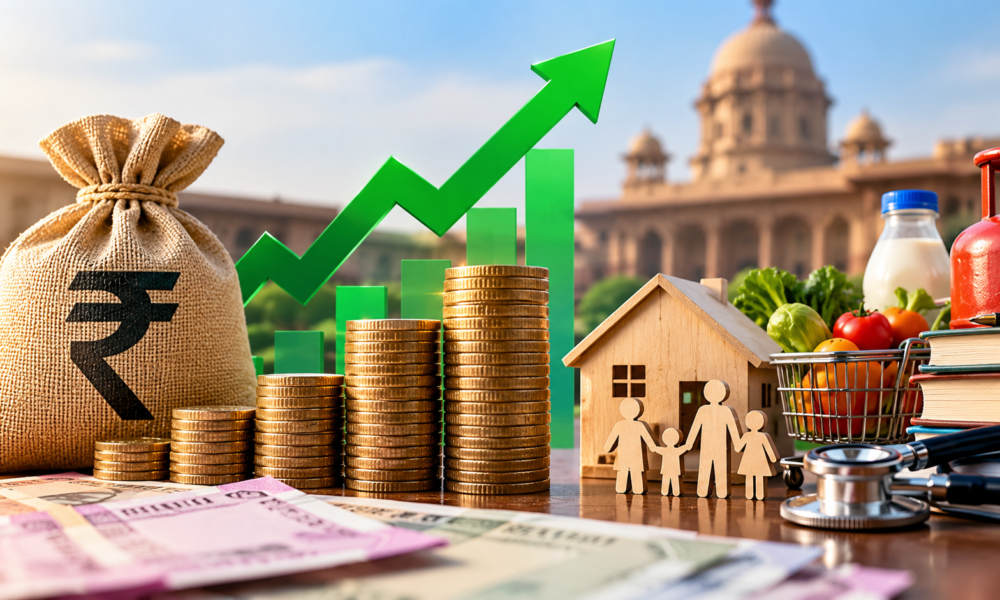
Central government employees and pensioners are awaiting the next revision of dearness allowance (DA) and dearness relief (DR). The adjustment is designed to help eligible households cope with changes in the cost of living.
As of October 24, 2026, the July 2026 revision had not been officially announced. The current DA rate for eligible central government employees remains 60% of basic pay, following the previous revision effective January 1, 2026.
The pending decision matters for household budgets, but any estimate of the next increase must be treated as provisional until the government issues an official order.
What Is Dearness Allowance?
Dearness allowance is an inflation-linked component of remuneration paid to eligible government employees. Dearness relief is the corresponding benefit for eligible pensioners.
The purpose is to help offset changes in living costs. DA is calculated as a percentage of basic pay, so the rupee benefit depends on both the applicable rate and the employee’s basic salary.
The Centre generally revises DA twice a year, with January and July effective dates. However, the announcement may occur later than the effective date.
The previous revision raised DA from 58% to 60%, effective January 1, 2026. The July revision requires a separate official decision.
What Is the Latest DA Hike Update?
As of October 24, the government had not confirmed the revised rate for the July 2026 cycle.
Reports have discussed a possible announcement around the next Cabinet meeting, but an expected meeting date is not confirmation that a proposal will be approved. The revised percentage, effective date and arrears arrangements should be considered final only after an official notification.
Employees should therefore avoid treating an anticipated increase as money already payable.
How Would a DA Increase Affect Monthly Salary?
The impact depends on the percentage-point increase and the employee’s basic pay.
Consider a hypothetical increase from 60% to 63%. This is an illustrative scenario, not an officially approved revision.
Basic pay per month
- DA at 60%
- DA at 63%
- Additional monthly DA
- ₹18,000
- ₹10,800
- ₹11,340
- ₹540
- ₹25,000
- ₹15,000
- ₹15,750
- ₹750
- ₹35,400
- ₹21,240
- ₹22,302
- ₹1,062
- ₹44,900
- ₹26,940
- ₹28,287
- ₹1,347
These figures show the difference in DA alone. They do not represent total take-home salary, which can also be affected by deductions, taxes, other allowances and individual service conditions.
If a revision is approved retrospectively, eligible employees may receive arrears for the period covered by the order. The applicable dates and payment arrangements must be verified from the official notification.
How Could a DA Hike Affect the Economy?
A DA increase can influence the economy through household consumption.
Employees may use additional income to cover groceries, rent, education, healthcare, transport, loan repayments or savings. Pensioners may direct some additional income towards essential expenses.
The effect on aggregate demand depends on the size of the increase, the number of eligible recipients and how much of the additional income is spent rather than saved or used to repay debt.
Certain consumer-facing sectors could benefit from higher spending, but a DA revision does not automatically produce a broad market rally. The overall effect is relatively small compared with larger drivers such as employment growth, credit conditions, inflation and private investment.
What About Pensioners?
Eligible central government pensioners receive dearness relief, which is revised alongside DA under the applicable framework.
A higher DR rate can increase monthly pension-related income, depending on the pensioner’s eligible basic pension and the terms of the official order.
Pensioners should distinguish dearness relief from other pension revisions. A DA or DR adjustment is not, by itself, a general increase in basic pension or a decision about the next Pay Commission.
Inflation, Savings and Household Budgets
The purchasing-power benefit of a nominal allowance increase depends on inflation.
If essential expenses continue rising, part of the additional income may simply compensate for higher prices. If inflation moderates, households may retain more of the increase for discretionary spending or savings.
For employees, a practical approach is to budget using the currently applicable DA rate and treat any future increase as additional income only after it is formally approved.
Conclusion
The pending July 2026 DA revision is important for eligible central government employees and pensioners, but the outcome remains uncertain until an official announcement.
The current rate remains 60% of basic pay. A hypothetical move to 63% would increase monthly DA by ₹540 for an employee with basic pay of ₹18,000, but this calculation should not be mistaken for a confirmed government decision.
For the wider economy, any increase could provide a modest boost to household spending. The size of that effect will depend on the final rate, the number of eligible beneficiaries and prevailing inflation.
Disclaimer: This article is for informational purposes only. Verify the latest rates and eligibility requirements through official government notifications.


No Comment! Be the first one.