








Infosys Q2 Results FY27: Profit Growth, Lower Revenue Guidance and What It Signals for IT Stocks
Infosys reported a 6.2% year-on-year increase in net profit for the second quarter of FY2026–27, while reducing its revenue growth guidance for the full financial year. The results highlight the...

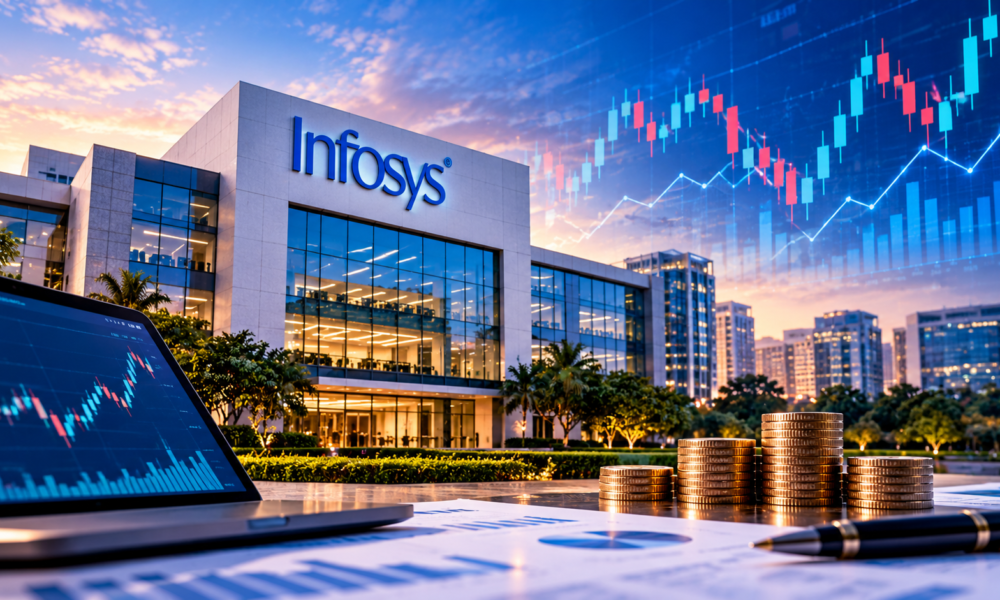
Infosys reported a 6.2% year-on-year increase in net profit for the second quarter of FY2026–27, while reducing its revenue growth guidance for the full financial year. The results highlight the difference between a company’s reported quarterly performance and its expectations for future business growth.
The company reported revenue of ₹49,244 crore for the quarter ended 30 September 2026, up 10.7% year on year. Net profit attributable to non-controlling interests was ₹7,823 crore, compared with ₹7,364 crore a year earlier.
What do the Q2 results show?
Financial indicator Q2 FY27 Year-on-year change
Revenue ₹49,244 crore +10.7%
Net profit ₹7,823 crore +6.2%
Operating profit ₹10,330 crore +10.4%
Operating margin 21.0% Broadly unchanged
The figures indicate that revenue and profit increased compared with the year-earlier quarter. However, quarterly growth alone does not tell the complete story of future demand, new contracts or the company’s longer-term growth prospects.
Why did Infosys lower its revenue guidance?
Infosys revised its FY27 revenue growth guidance to 1%–2% in constant-currency terms, down from its earlier range of 1.5%–3%, according to reports published on 23 October. Revenue guidance is management’s stated expectation for future performance under the assumptions available at the time. A reduction signals a more cautious outlook, but it does not mean that the company’s revenue is necessarily expected to decline in absolute terms.
The distinction between reported revenue and constant-currency growth is important. Exchange-rate movements can influence the rupee value of overseas revenue, while constant-currency measures attempt to assess growth after adjusting for currency fluctuations.
What does this mean for India’s IT sector?
Large Indian IT services companies depend on spending by corporate clients across industries and geographies. Clients may reassess technology budgets when economic conditions become uncertain or when they seek clearer returns from major technology investments.
At the same time, demand for cloud computing, cybersecurity, data modernisation and artificial intelligence can create new opportunities for service providers.
AI introduces both opportunities and challenges. It can generate demand for implementation and consulting services, but it may also change how software development and other technology work are delivered, affecting pricing, productivity and the number of hours required for some projects.
These are wider industry considerations, not proof that any single factor caused Infosys’ revised guidance.
What should investors watch next?
Investors tracking Infosys and other IT stocks should examine deal wins, revenue growth, margins, client spending, employee utilisation and management commentary in subsequent quarters.
They should also distinguish between reported financial results and market expectations. A company can report profit growth while its share price reacts negatively if its outlook falls short of what investors had anticipated.
The bigger picture
Infosys’ Q2 performance shows continued year-on-year profit growth alongside a more cautious full-year revenue outlook.
The central question for the sector is whether technology spending, including AI-related investment, can support sustainable growth while clients remain selective about costs.
The results offer useful evidence about one major company, but they should not be treated as a complete forecast for every Indian IT services firm or as a standalone signal to buy or sell a stock.





No Comment! Be the first one.