







SBI Q1 Profit Rises 10% as Bad Loans Fall to More Than Two-Decade Low
State Bank of India (SBI), India’s largest public sector bank, reported a strong first quarter for FY27, with net profit rising 10% year-on-year as improved interest income and better asset quality...

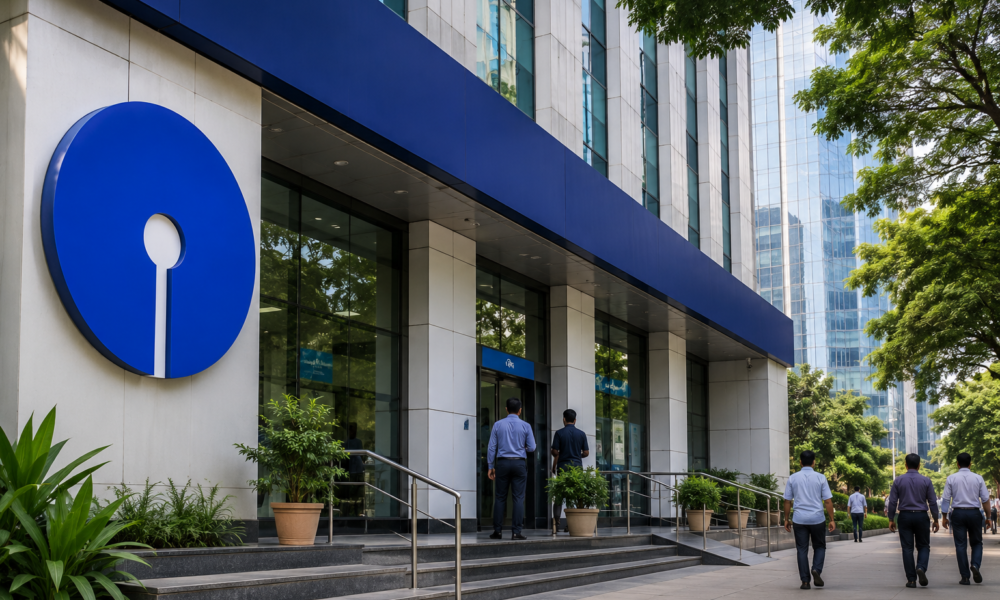
State Bank of India (SBI), India’s largest public sector bank, reported a strong first quarter for FY27, with net profit rising 10% year-on-year as improved interest income and better asset quality supported its performance.
SBI reported a net profit of ₹21,121 crore for the April to June quarter, compared with ₹19,160 crore in the same period last year. Net interest income, which reflects the difference between interest earned on loans and interest paid on deposits, increased 12% to ₹46,992 crore from ₹41,907 crore a year earlier.
The bank’s asset quality was one of the key highlights of the results. Gross non-performing assets fell by 36 basis points year-on-year to 1.47%, while the net NPA ratio declined to 0.38%. SBI said these were the lowest NPA levels it had recorded in more than two decades.
Lower bad-loan levels are important for banks because they can reduce the amount of money that needs to be set aside against loans that may not be repaid. Stronger asset quality can therefore support profitability and give banks greater room to lend.
SBI’s domestic net interest margin, or NIM, stood at 3% during the quarter, improving by seven basis points sequentially. The bank’s overall NIM increased by five basis points from the previous quarter to 2.86%. NIM is closely watched by investors because it shows how much a bank earns from lending after accounting for its funding costs.
The strong earnings also attracted attention from major brokerages. Jefferies said SBI’s quarterly profit was ahead of expectations, supported by higher net interest income, treasury gains and lower operating expenses. It also noted that the bank’s domestic NIM recovery helped drive strong income growth.
Nomura also highlighted the positive margin performance, while noting that deposit growth was slower than loan growth. UBS said SBI’s margins had improved and that loan growth remained healthy. Citi pointed to the earnings beat, higher net interest income and controlled operating expenses.
Despite the strong results, SBI’s share price showed a mixed reaction in Monday’s trading session. The stock opened higher and touched an intraday high of ₹1,113.30. It later lost momentum and fell nearly 2% to an intraday low of around ₹1,076.
The market reaction shows that strong quarterly numbers do not always translate into immediate gains for a stock. Investors also assess valuations, future growth, margins, deposit trends and the broader market environment before deciding how much a company’s results are worth.
For SBI, the next focus will be whether it can maintain healthy loan growth while keeping margins stable and asset quality strong. The bank has indicated a FY27 domestic NIM target of around 3% and credit growth guidance of 14% to 15%.
For the wider banking sector, SBI’s results offer an encouraging signal. Falling bad loans and steady lending growth suggest that India’s biggest public sector lender enters the new financial year with a stronger balance sheet.
For investors, the bigger story is not simply the 10% rise in quarterly profit. It is the combination of improving asset quality, stronger interest income and stable margins that will determine whether SBI can sustain its performance through FY27.





No Comment! Be the first one.