






Stock Markets Turn Volatile Ahead of Election Results in India
Indian stock markets are witnessing increased volatility ahead of upcoming election results, as investors adopt a cautious approach amid political uncertainty. Benchmark indices have shown sharp...

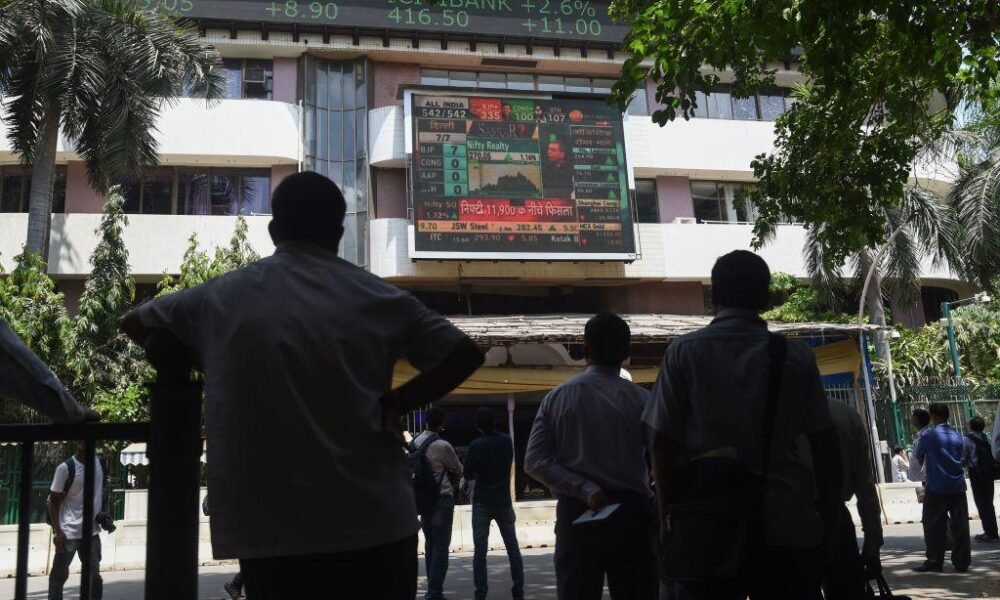
Indian stock markets are witnessing increased volatility ahead of upcoming election results, as investors adopt a cautious approach amid political uncertainty.
Benchmark indices have shown sharp intraday movements, reflecting mixed sentiment among market participants. Analysts note that elections often create short-term uncertainty, leading to profit booking and defensive positioning by investors.
Market participants are closely watching political developments, as election outcomes can influence policy direction, government spending and reform agendas. These factors play a crucial role in shaping investor confidence and market trends.
Investor caution and sectoral shifts dominate market sentiment
Experts highlight that both domestic and foreign investors tend to reduce risk exposure during election periods. Foreign Institutional Investors (FIIs) may adopt a wait-and-watch approach until there is clarity on the formation of the government and future policies.
At the same time, defensive sectors such as banking, FMCG and utilities are attracting attention due to their relatively stable performance. These sectors are often preferred during uncertain phases.
On the other hand, sectors closely linked to government policies—such as infrastructure, defence and public sector enterprises—are experiencing higher volatility as investors speculate on potential policy continuity or changes.
Retail investors, however, continue to participate actively in the market through systematic investment plans (SIPs) and long-term strategies, providing some stability despite short-term fluctuations.
Market experts suggest that while volatility may persist in the near term, long-term fundamentals of the Indian economy remain strong. Investors are advised to focus on disciplined investing and avoid making impulsive decisions based on short-term movements.
Historically, markets tend to stabilise once election results are announced and policy clarity emerges. Until then, fluctuations are expected to remain a key feature of market behaviour.
The current phase highlights how political events can influence market sentiment, reinforcing the close connection between elections and equity market performance in India.







No Comment! Be the first one.