








ePlane eyes fresh capital to accelerate India’s urban air mobility ambitions
Chennai-based electric aviation startup The ePlane Company is preparing to raise between $40 million and $50 million in a new funding round, according to people familiar with the development....

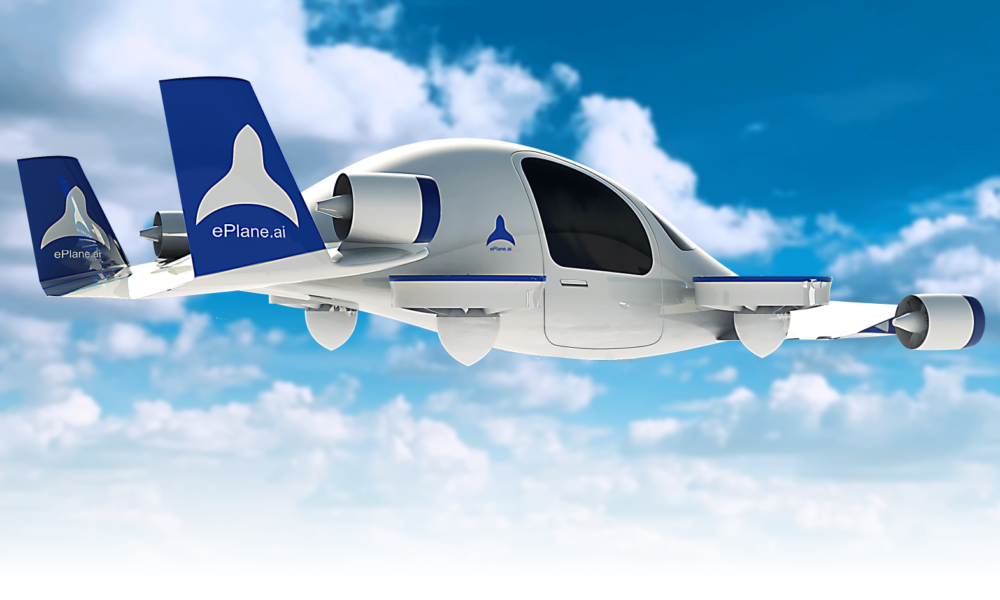
Chennai-based electric aviation startup The ePlane Company is preparing to raise between $40 million and $50 million in a new funding round, according to people familiar with the development. Early-stage deep-tech investor Speciale Invest is expected to co-lead the round, signalling continued investor confidence in next-generation mobility platforms emerging from India’s research ecosystem.
Founded by IIT Madras professor Satya Chakravarthy, the startup is building compact electric vertical take-off and landing (eVTOL) aircraft designed for short intra-city commutes, cargo logistics and emergency response. The company’s aircraft are engineered to operate in dense urban environments, with an emphasis on low noise signatures, reduced operating costs and zero tailpipe emissions.
The proposed fundraise comes at a critical stage in the company’s development cycle. The capital is expected to support prototype refinement, certification pathways, flight testing and manufacturing readiness. Regulatory approvals remain one of the most complex hurdles in the eVTOL segment globally, and industry observers note that early alignment with aviation regulators will be key to commercial deployment timelines.
India’s urban mobility pressures, combined with rising congestion and expanding metropolitan regions, have made aerial mobility an area of increasing policy and investor interest. While several global players are pursuing similar aircraft platforms, domestic development offers advantages in cost engineering, localisation and alignment with India’s infrastructure realities.
The ePlane Company has previously demonstrated cargo drone capabilities and continues to position its technology stack for multiple use cases, including medical supply transport and disaster response. Analysts say diversified applications could improve commercial viability in early adoption phases before passenger mobility reaches scale.
Investor appetite for electric aviation remains selective, with funding favouring teams that combine aerospace engineering depth with regulatory understanding and scalable manufacturing strategies. If the round closes at the indicated size, it would rank among the larger recent investments in India’s advanced air mobility space and reinforce the growing intersection of deep technology, sustainability and transport innovation.
Industry stakeholders view developments in this sector as part of a broader shift toward electrified, autonomous and distributed mobility systems. Whether urban air taxis become mainstream will depend not only on technology readiness, but also on airspace integration frameworks, public safety assurances and viable operating economics.
For now, the planned raise underscores a clear signal: India’s deep-tech startups are beginning to attract capital for hardware-intensive innovation traditionally dominated by global aerospace incumbents.









No Comment! Be the first one.